
F.U.E.L : A feedback framework
F.U.E.L : A feedback framework
“I didn’t sleep a wink last night.”
“The faster I get this over with, the better.”
“I was a nervous wreck before the meeting him.”
“Seriously, they don’t pay me enough to do this job.”
Are these familiar thoughts you’ve had or comments you’ve made when needing to give corrective feedback? You’re not alone. In a survey by Zenger Folkman of 7,631 individuals, 44% agreed that they believed giving corrective feedback was stressful or difficult.
In a previous article, we had shared some suggestions to help the process of giving redirecting or corrective feedback. Redirecting feedback is corrective feedback that enables a recipient to build know-how or competence, purpose or motivation, or adjust behaviour.[1] It includes suggestions for doing something that hasn’t been done, ideas about improving the way something is done and recommendations to discontinue something getting in the way.
Given that most of us seem to be uncomfortable with giving redirecting feedback, we’d like to share a model that could help guide your conversation.
Brenda & Glenn
Brenda noticed Glenn was consistently making errors in the daily cumulative reports of the number of cases attended to at the centre. She wasn’t sure what had caused this. She needed to let Glenn know that the errors could not continue as it causes repercussions in staff deployment at the centre.
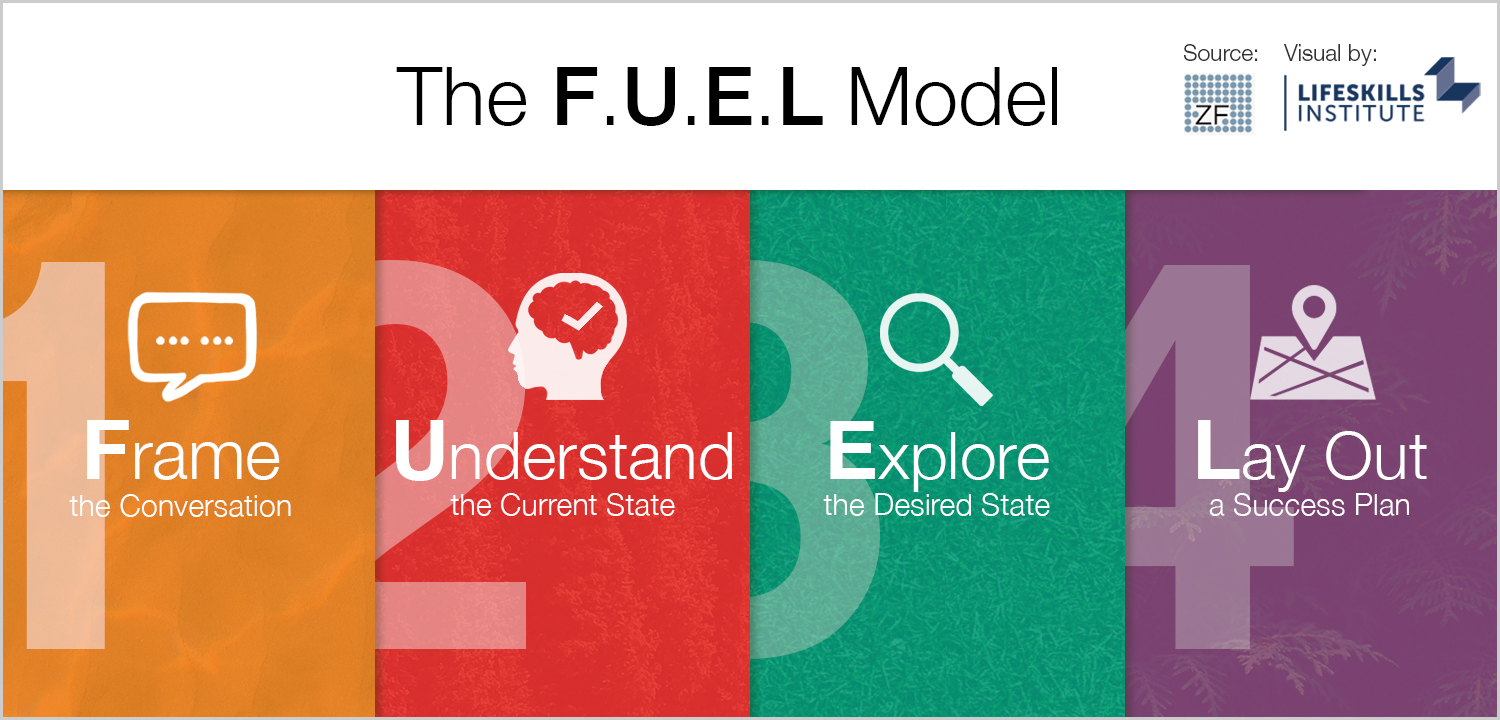
Framing the conversation provides an outline and focus for the conversation. It lays out the issues that will be discussed as well as the desired outcome of the conversation.
Brenda: Hi Glenn, I would like to talk to you about the daily report submission. Is this a good time?
Glenn: Sure, Brenda.
Brenda: I would like to share some observations and hear your point of view regarding the statistics in the daily reporting. At the end of the conversation, I would like us to work together on figuring out how to reduce or even eliminate the errors in the reporting.
In this step, we’re not trying to solve the issue at hand but just to understand it better. The key objective of this step is to expand the feedback receiver’s point of view of the situation.
Brenda: If I may, could I share with you what I have noticed?
Glenn: (a little apprehensive) Sure, Brenda.
Brenda: During the reporting period of the last two weeks, I have noticed that you’ve been missing out the number of cases attended to. The missing number of cases has an effect on my staff deployment scheduling process. On some days, not all, we then face a shortage of staff to attend to cases and have some clients walk away disgruntled as we were unable to attend to them. It also puts pressure on the staff on duty to close their cases quickly so they can attend to the waiting cases. We’re not sure but clients may also feel that they could have gotten more out of their time with us. If this keeps going, we may have a growing number of dissatisfied clients.
Glenn: Thanks for bringing this up, Brenda. I hadn’t realised that it affected the scheduling process.
Brenda: I didn’t think you were aware, which is why I wanted to have this conversation with you. What do you think could be causing the lapse in reporting the case numbers by two staff?
Glenn then gives an explanation.
Step 3 is where we start to look for solutions to resolve the issue that was defined in step 1. And you can jump in with how you can directly help resolve it too.
Brenda: Is this something that you would like to work on together so the whole team benefits?
Glenn: Yes, Brenda. I kinda feel lousy that I stressed the team out.
Brenda: Describe to me what a good working routine would look like for our team, Glenn.
Glenn gives a possible working routine that would work for the team, including him. Brenda encourages him on coming up with some solutions and asks what else could be explored. By doing so, Glenn is given an opportunity to explore and suggest more possible solutions. Brenda continues to encourage him and offers to support his plans.
This last step is an accountability step with specific timelines in place for specific tasks or milestones. And you naturally create a follow-up plan and check-in opportunities.
Brenda: So, what’s our next step?
Glenn is now more engaged in getting the solution/s going and lets Brenda know the next steps he needs to take to move forward. Brenda continues to be encouraging and states the action steps she can take to support Glenn’s before asking for a follow-up meeting.
Brenda: Thank you for being willing to hear the feedback and work with me on this, Glenn. When next week shall we meet again to discover if we need to finetune this machinery?
Glenn: Same time and day next week works for me.
Brenda: Okay, that works for me too.
Getting comfortable
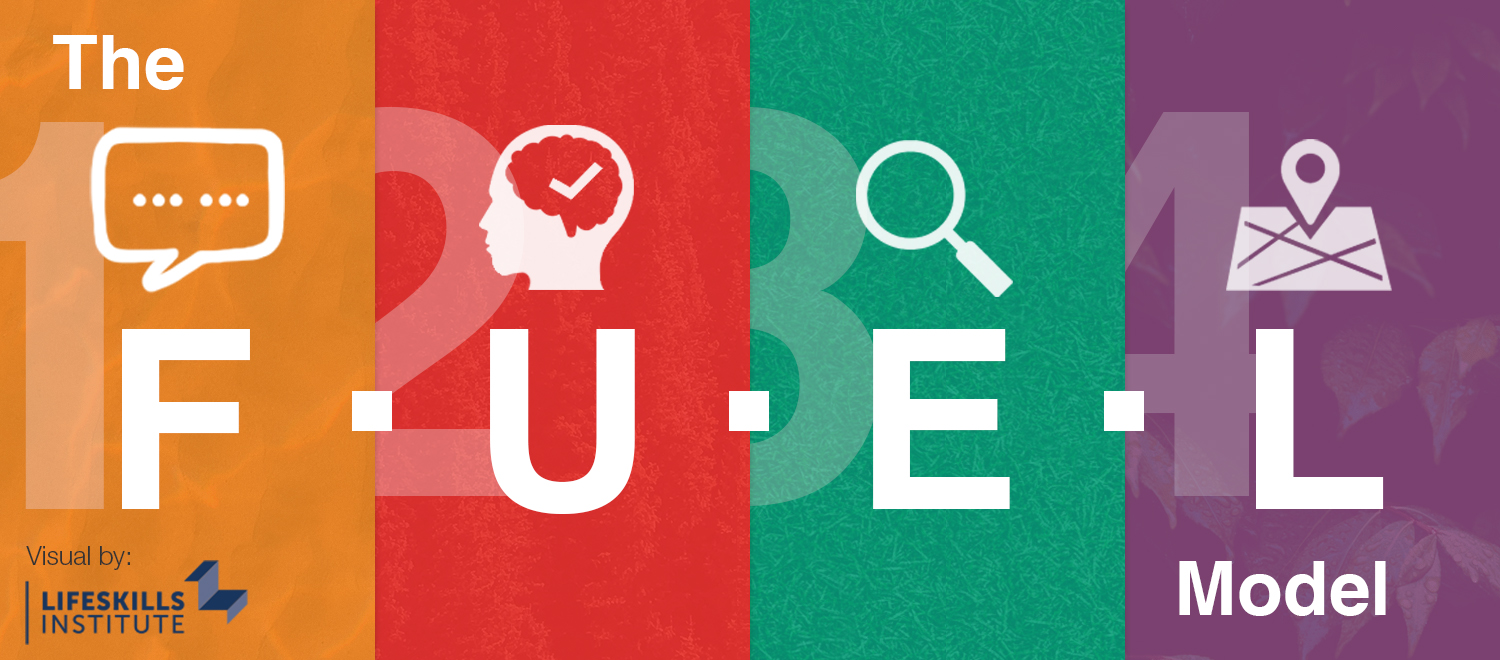
Here’s a quick review of the 4 steps of F.U.E.L:
Step 1: Frame the conversation
Step 2: Understand the current state
Step 3: Explore the Desired State
Step 4: Lay Out a Success Plan
Most people managers would jump in with solutions at step 2, Understand the Current State, instead of allowing the person receiving the feedback to expand his viewpoint on the issue. We naturally want to put on our advisory hat and resolve the issue ASAP and get on with the work.
We hope that by drawing out what a F.U.E.L framework feedback session looks like, you’ll be able to see the value in spending the right amount of time on the first two steps of the conversation. You may be surprised that the solutions in step 3 could be more than what you had thought it could be as step 2, if carefully employed, would have opened up the mind of the feedback receiver and you to be able to come up with more creative, efficient and targeted solutions.
©Published by Lifeskills Institute Malaysia
Lifeskills Institute is the strategic partner of Zenger Folkman for Singapore and Malaysia. Our Chief Enabling Officer, Ian Tan is a Master Facilitator certified by Zenger Folkman.
Zenger Folkman is a strengths-based leadership development company helping leaders elevate their people and organisations. Co-founders Dr. Jack Zenger and Dr. Joe Folkman utilise empirical data and behavioural evidence to help leaders become extraordinary.
[1]-Definition by Zenger Folkman
More From This Category

Learning Skills That Transformed How We Work Together: A participant reflects on the impact of a 2-day 4D-based team building programme.
Agency leadership isn’t exactly a walk the the park. You often find yourself stumbling at situations. With every different team comes different circumstances and dynamics. Lee Fong and her team has watched us grow from my pre promotion years to jostling the issues we face today.
If you’re an agency leader – you will never be the best. You’ll never get everything and everyone right but it’s important that you always know who you are in different seasons, how you’ve grown or changed with your seasons and what that means to the people in your team.
A guiding principle is always good! So friends I’m not being paid to do this but I owe alot to Lee Fong and her team!

How DISC Personality Profiling Can Transform Your Leadership Style
There is no one-size-fits-all style of leadership for the modern fast-paced business world. Great leaders understand how to connect on a deeper level with their teams, finding out what drives each one and changing their style to obtain optimum performance from every...

Top 6 Leadership Trends in 2025
The year 2025 is set to be a transformative one for leaders in Malaysia and beyond. The abilities and methods that once characterised success are being replaced by a new set of priorities as technology advances and the workforce changes. Leaders of organisations must...

Building a Culture of Growth with Customized Corporate Training
Organisations in Malaysia cannot afford to take a one-size-fits-all approach to talent development given the competitive environment of today. The most prosperous businesses are those that actively foster a culture of expansion, where ongoing education is not merely a...

How to Choose the Right Leadership Development Program in Malaysia
It can be difficult to navigate Malaysia's leadership development landscape. How do you choose from the many programs available to find the one that best suits your needs and yields noticeable results? Selecting the top leadership programs in Malaysia is about making...

What is 360 Feedback and Why It Matters?
Feedback used to frequently go only one way in the traditional workplace: from a manager to their direct report. Although this method has its uses, it offers a constrained and frequently skewed perspective of a person's effectiveness and influence. 360-degree feedback...

5 Signs Your Organisation is Ready to Embrace a Coaching Culture
A Malaysia coaching culture is a great way to drive employee growth and organizational success. At Lifeskills Institute Malaysia, we believe that creating a coaching culture transforms the workplace by empowering individuals and teams. But how do you know if your...

6 DISC Tips to Revamp an Unhealthy Work Culture
An unhealthy work culture may kill workplace productivity and morale, but Malaysian DISC training has a realistic answer to improve Malaysian workplace culture. Here at Lifeskills Institute Malaysia, we use DISC behavioural analysis to transform toxic workplaces into...
Unleashing Potential of Teams Using DISC Behavioural Analysis in Malaysia
Creating effective and high-performance teams in Malaysia's multicultural workforce is a top agenda. Malaysia DISC profiling offers a useful method to evaluate team dynamics and unleash the potential. At Lifeskills Institute Malaysia, we utilize DISC behavioural...
0 Comments